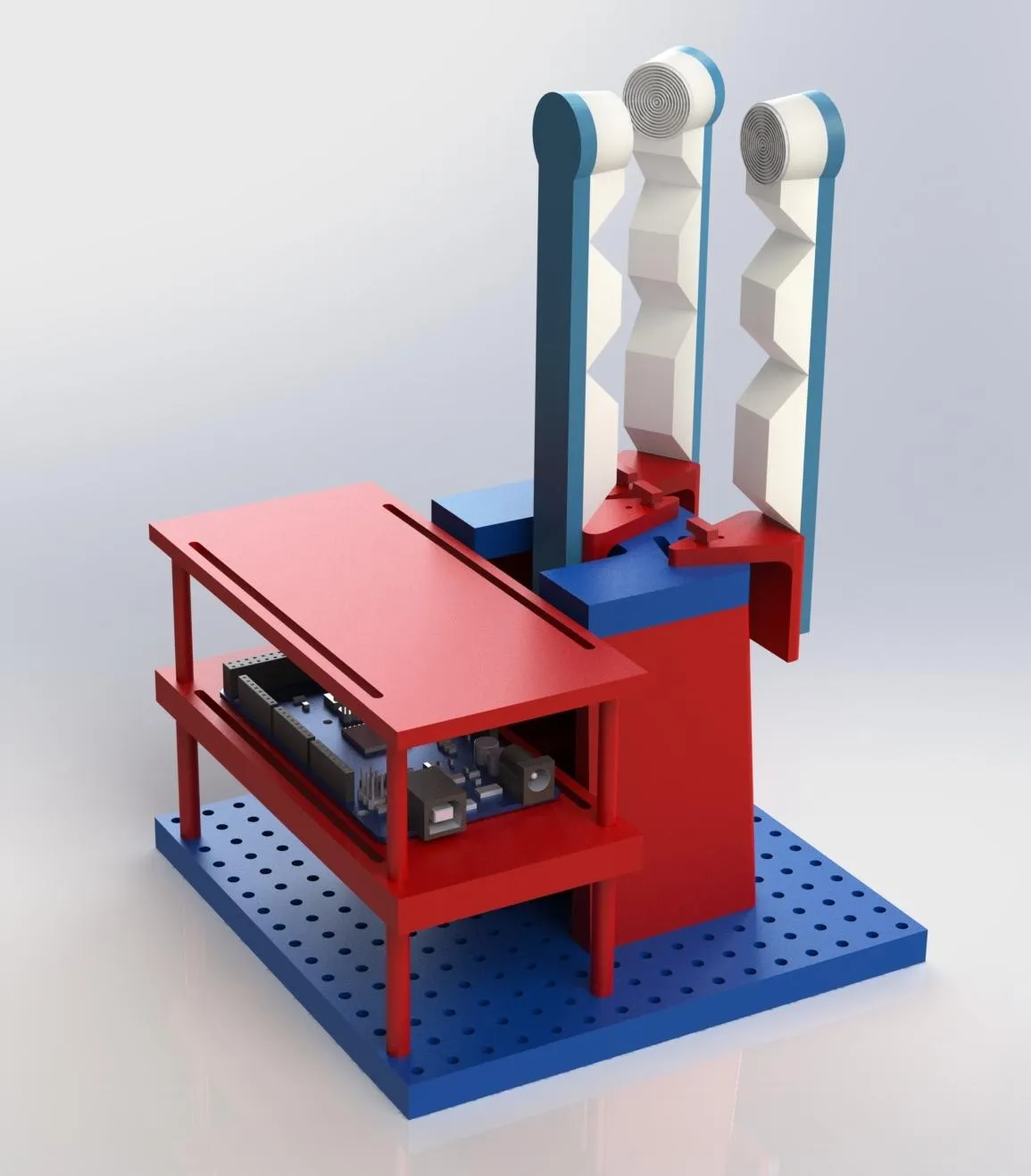
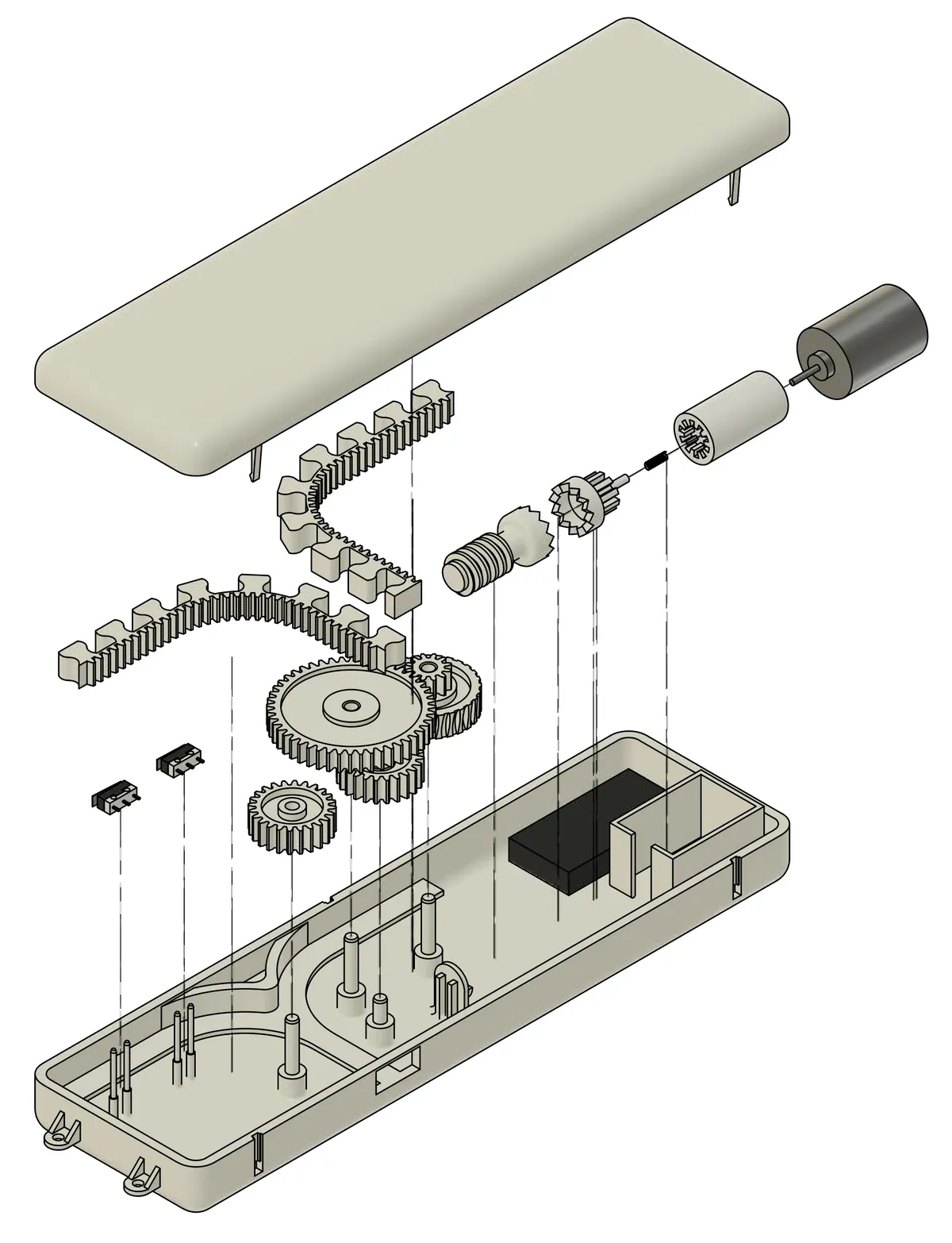
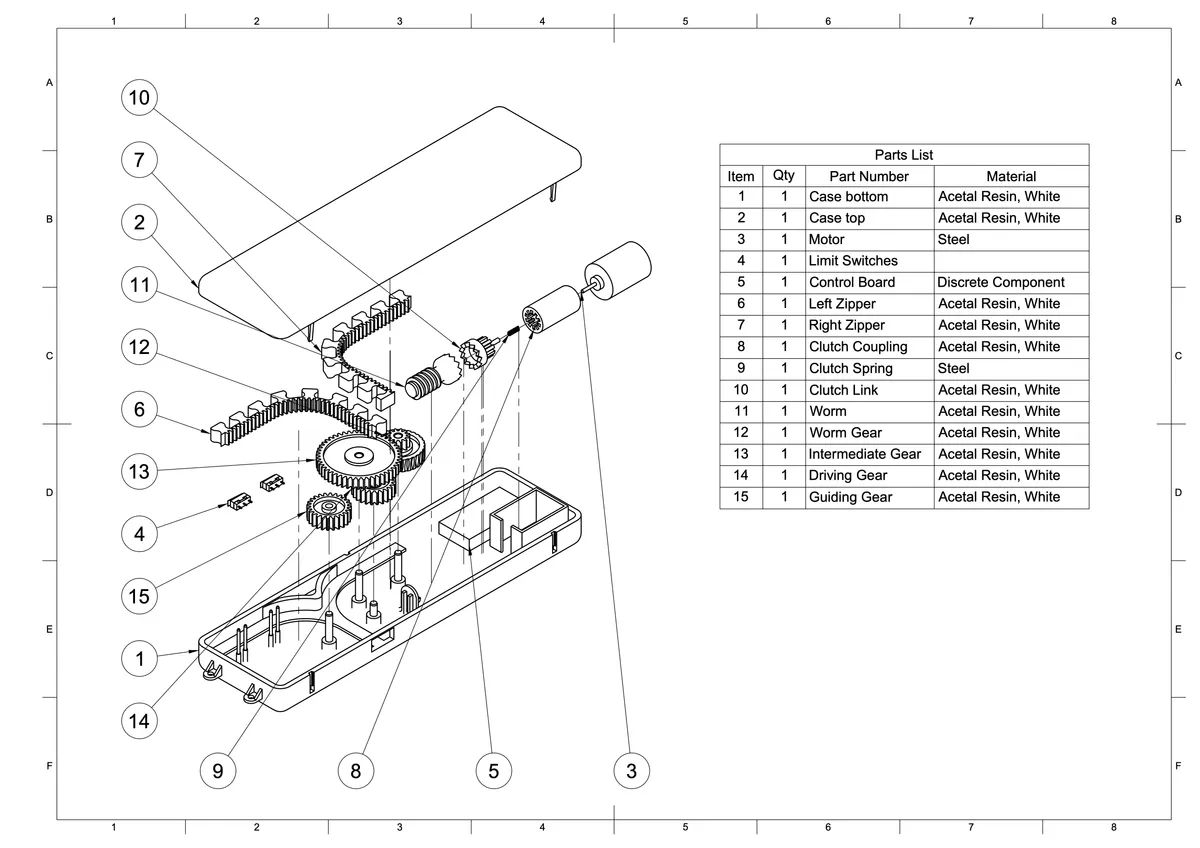
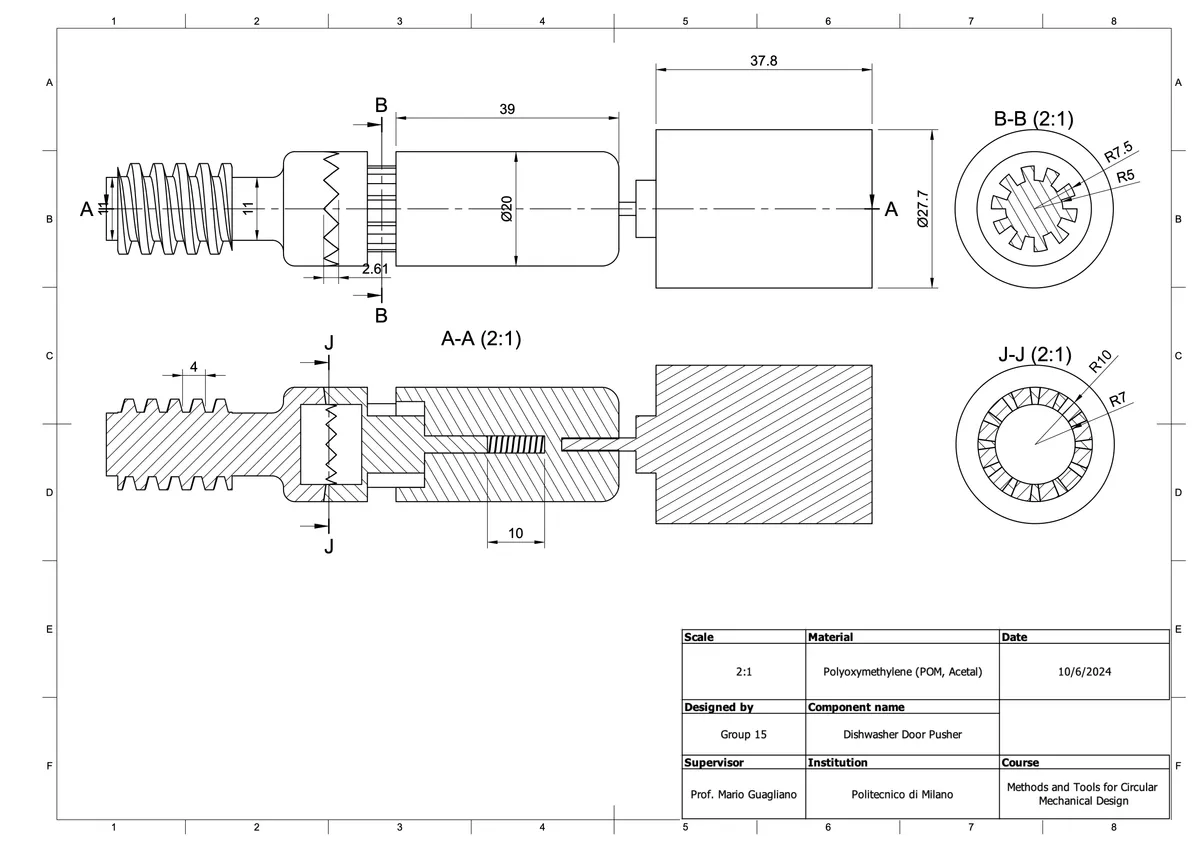
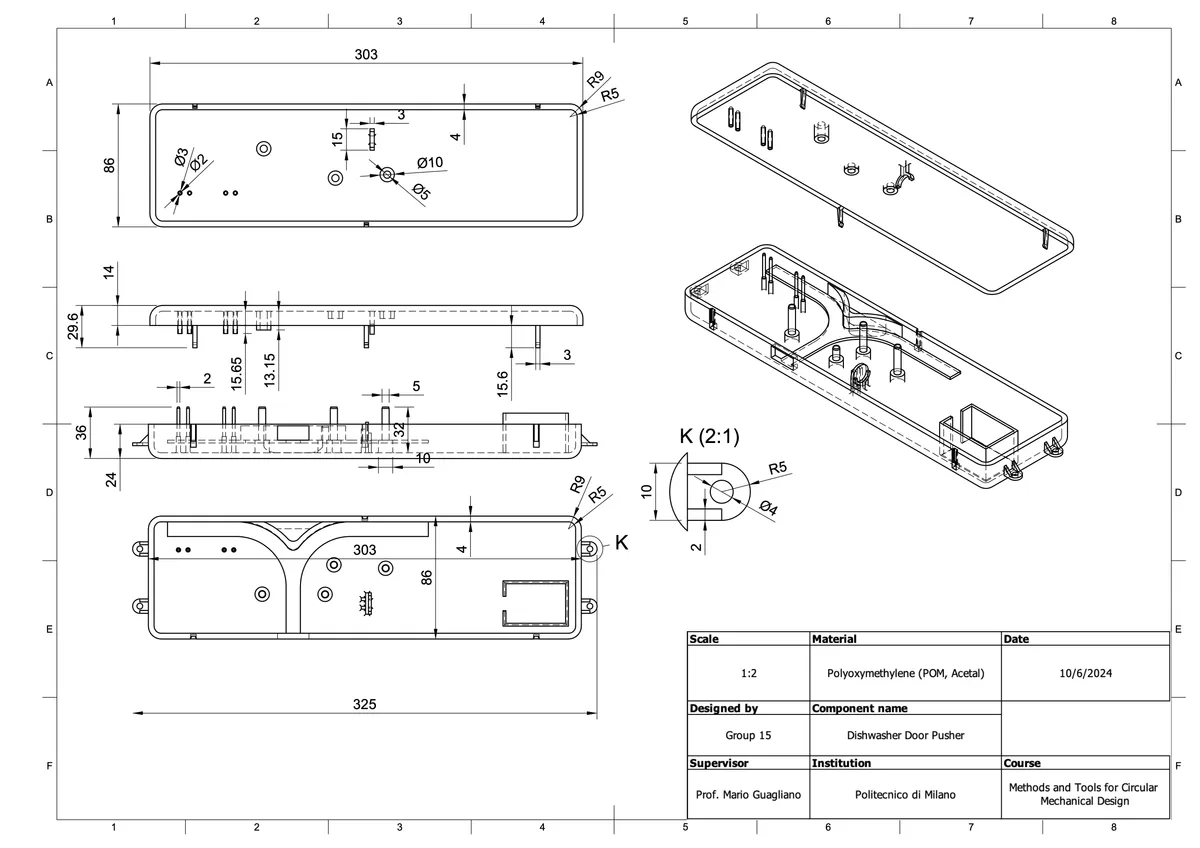
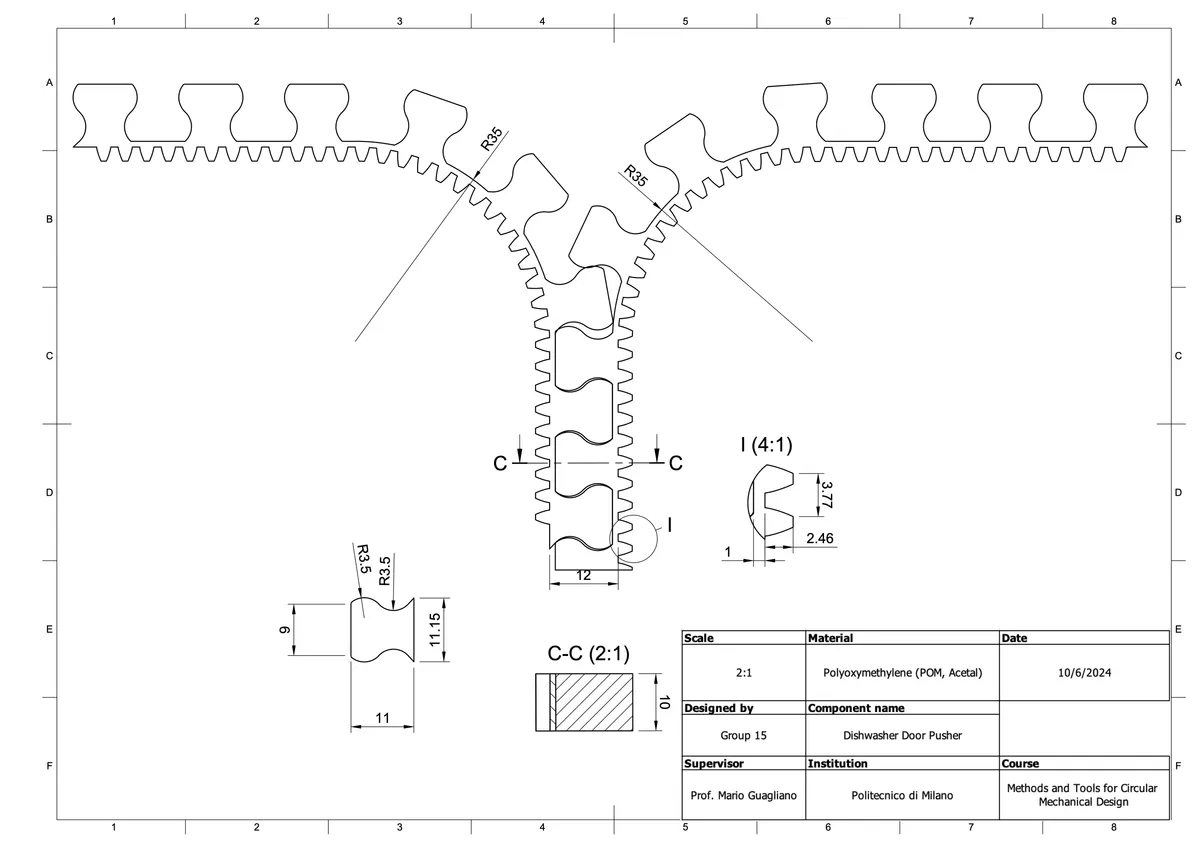
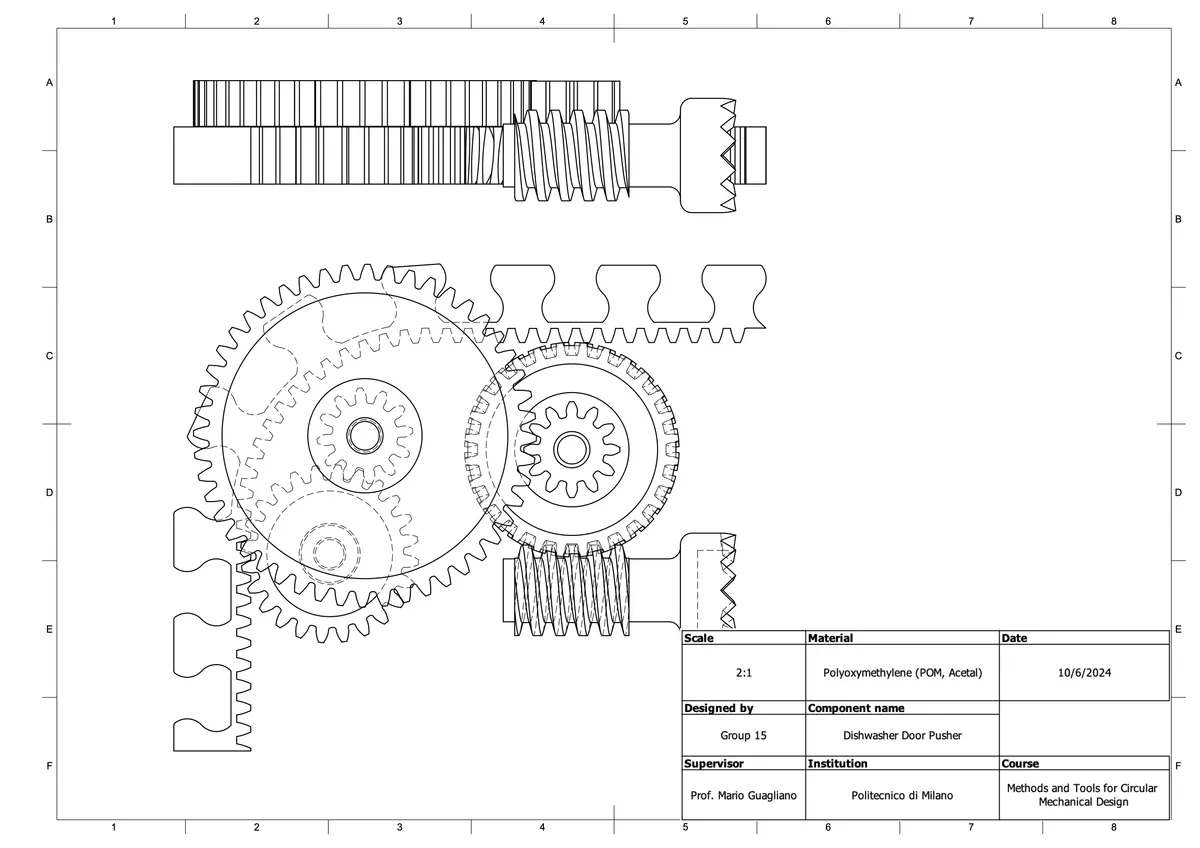
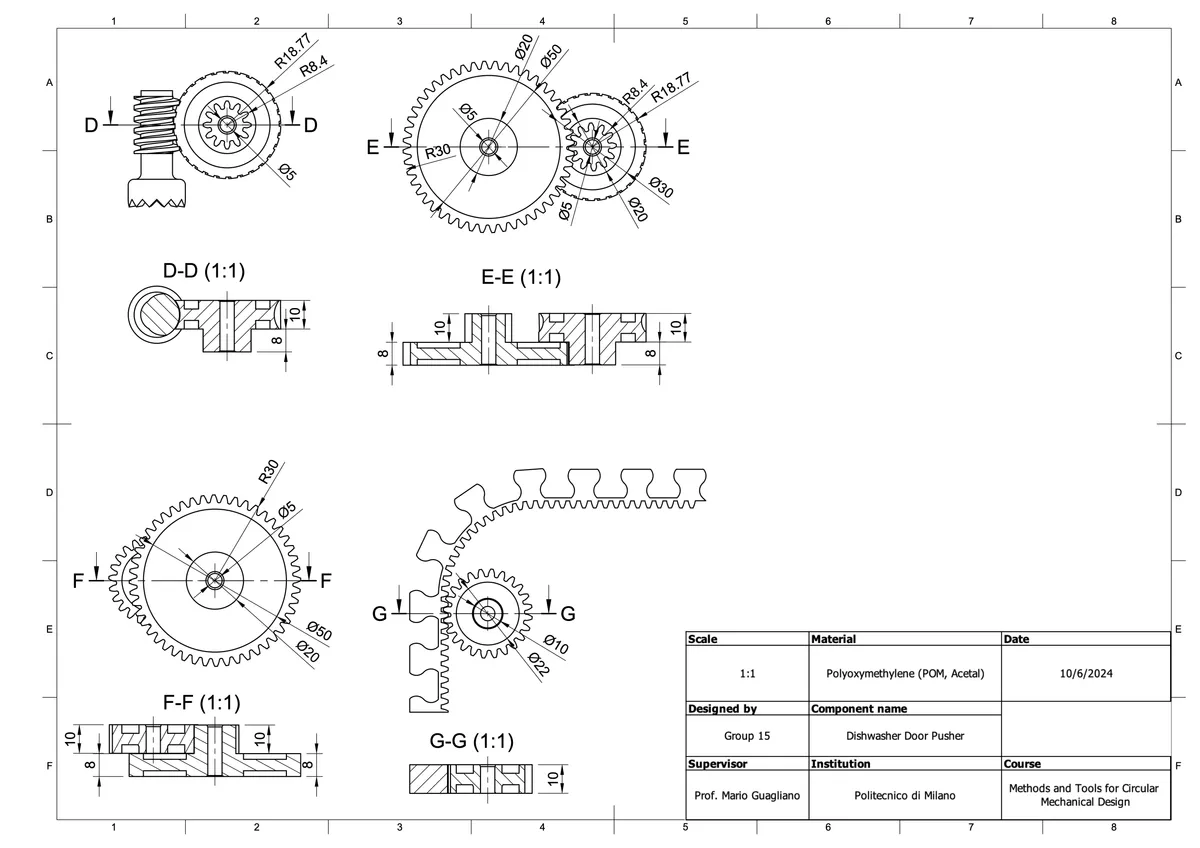
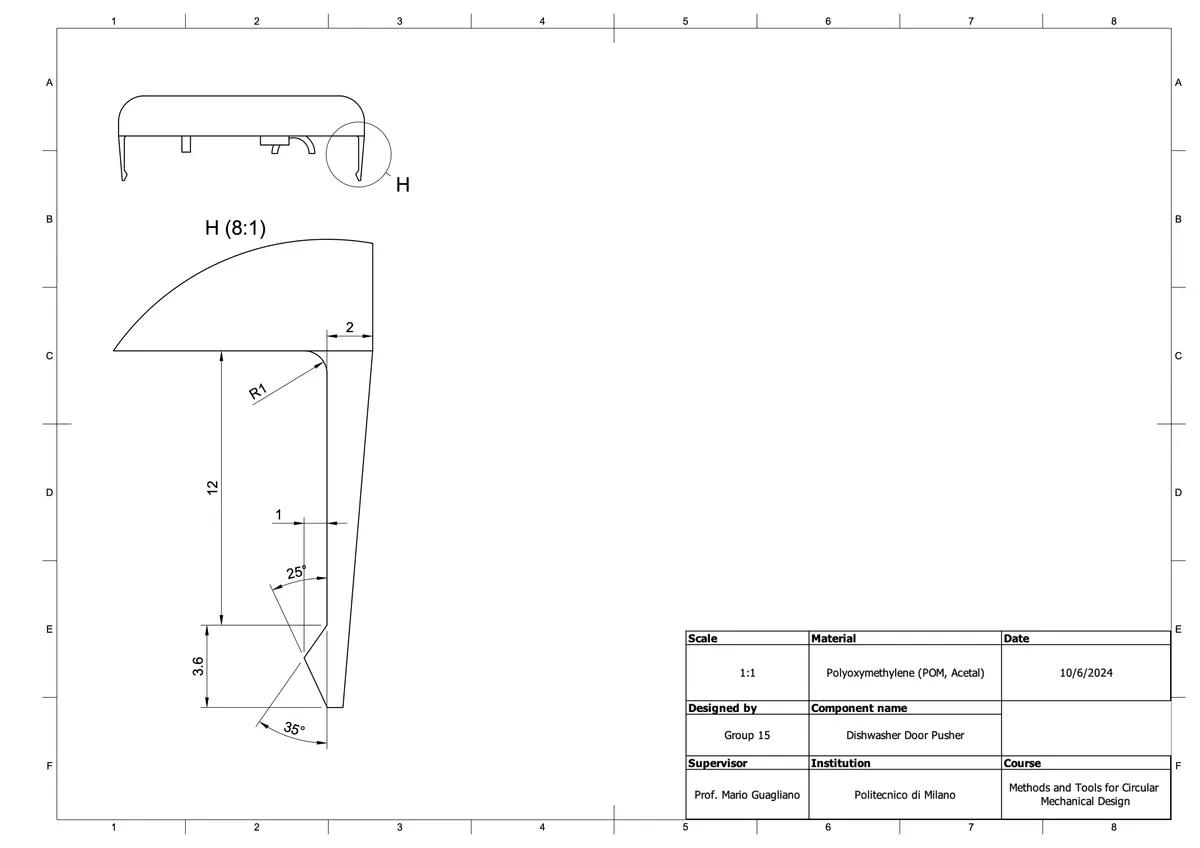
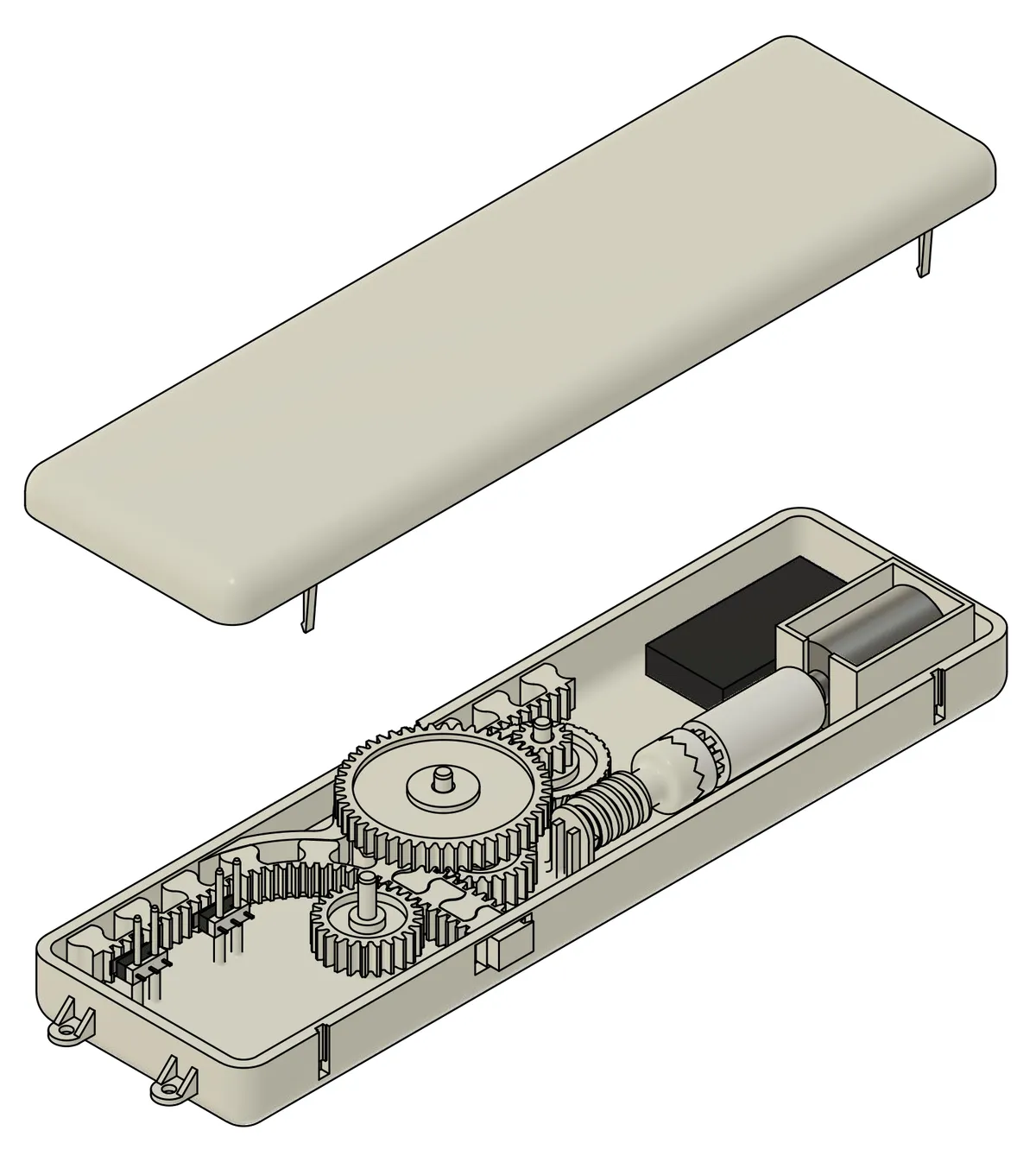
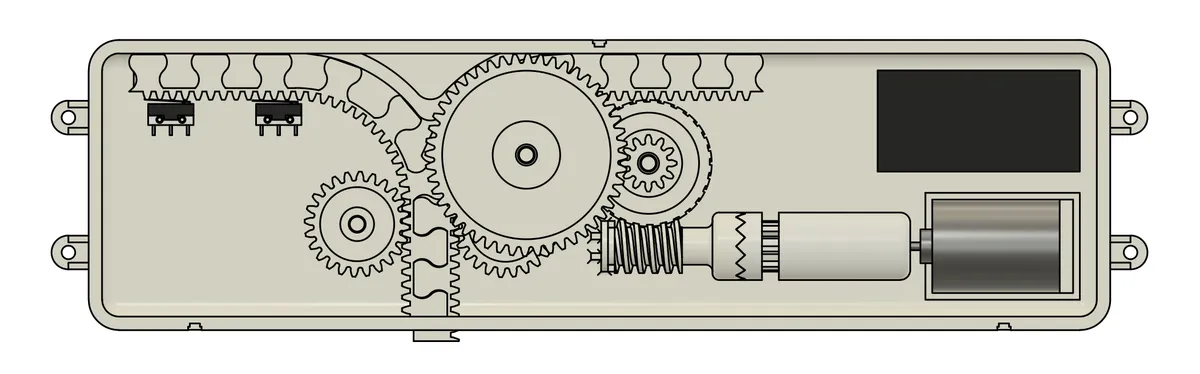
This was a design project for a university course - I designed a new dishwasher part which pushed open the dishwasher door at the end of the cycle, to allow steam to escape. The flexible “zipper” was utilized to achieve a sufficient stroke length, but in a constrained space when retracted. I also designed a slip clutch which disengaged when the force on the zipper was too high (i.e. if there was an obstruction or something was jammed).
The design was parametrically modelled in Autodesk Fusion, which allowed for a model which could easily be tweaked as the design changed. It was my first time using parametric modelling (being used to the ephemerality of direct modelling in Rhino), so there was a steep learning curve but I’ve learned a lot about how to do it. As I learned, the process of parametric modelling relies heavily on a smart and consistent definition of parameters (distances, angles, etc). Taking a few minutes at the start of modelling each component to think about what the important parameters are can make future work a million times easier.
I had to recreate some parts from reference drawings - limit switches and the motor. Interestingly I found this process to be quite straightforward, as long as the reference drawings were clearly labelled. The reference drawings I created were easy enough to create in Fusion, given that all the data is contained within the program.
All the parts (besides the motor, control board, spring, and limit switches) were designed to be injection moulded out of POM. There were many different aspects of this design which ensured the quality and sustainability of the product. The key processes were: material selection, strength analysis (e.g. buckling, fatigue, bending), snap-fit joint design, gear ratioing and design, slip clutch design, injection mouldability, costing, assembly analysis, environmental impact, failure mode and effect analysis, end-of-life analysis.
Overall, I found this to be an incredibly challenging project, but one from which I learned so much about. I learned all the stages of responsibility creating a product which is to have market viability. If I were to do the project again, I would take some more time at the start to plan out the workflow of the modelling, making sure to finalise the key features before actualising it in a parametric model.